Featured
Table of Contents
That's false. It's real that specific skills or capacities have a tendency to be dominated by one side of the brain over the other. Generally talking, the left side of your brain controls language handling, memory association, and positive emotions, while the best side of your brain controls visual interpretation, spatial thinking, and adverse emotions.
EMDR makes use of bilateral excitement to enable your brain to make new neural connections. Hypnosis, at the same time, utilizes directed leisure to place you in a focused state for restorative purposes. EMDR has confirmed to be very reliable. Specifically, the Department of Veterans Matters highly advises it for experts dealing with PTSD.1 Why EMDR is so effective is still uncertain.
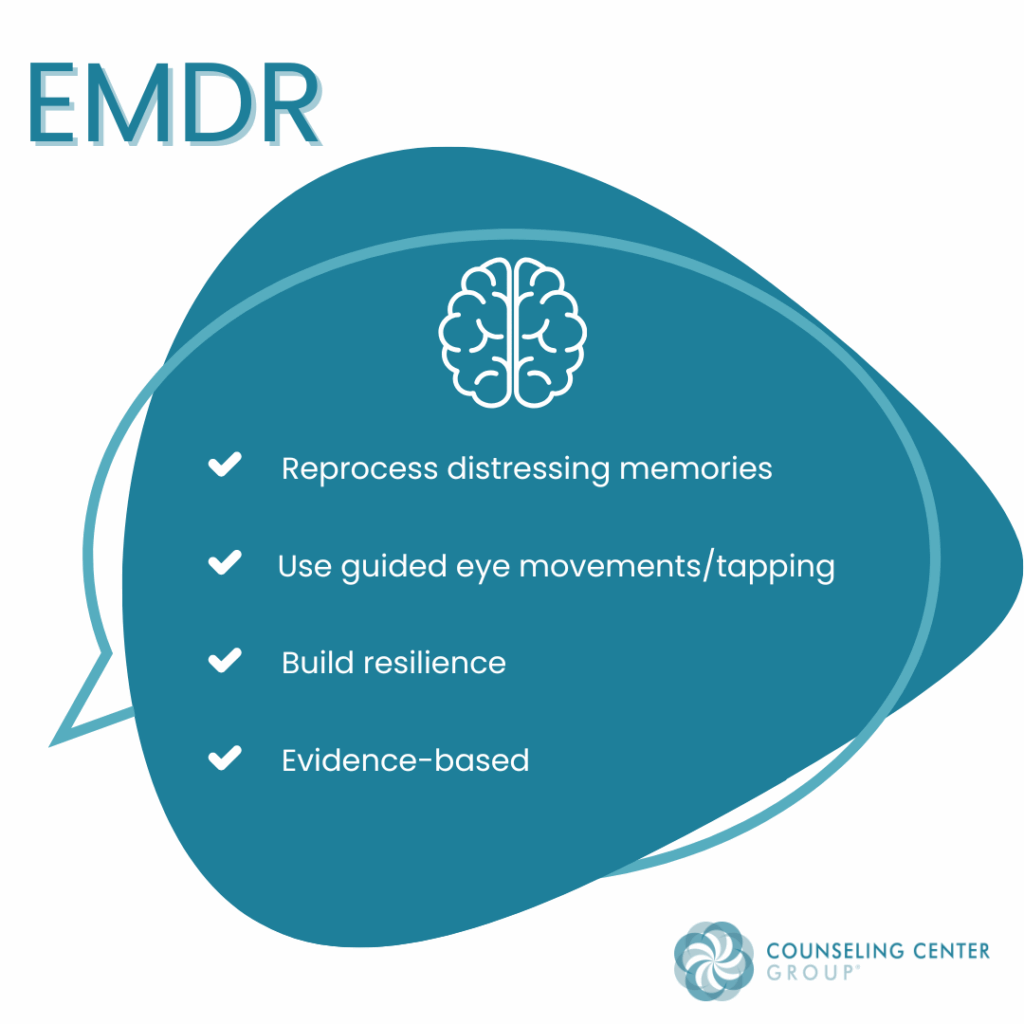
In spite of its performance, EMDR has actually historically been controversial, and doubters suggest that the BLS component of EMDR isn't relevant to therapy. BLS is an essential technique in EMDR, yet it isn't the only component of the procedure.
Score your distress with the SUD range assists you and your specialist recognize which particular components of the target memory upset you most. Your therapist can then assist you create much better resources to handle those emotions. At some point your stressful memory will become less traumatic, and you'll rate that memory reduced and reduced up until it's no more distressing whatsoever (zero on the SUD scale).
Assessing Candidate Readiness for EMDR Basic Training
At the desensitization phase, your specialist will ask you to concentrate on the target memory throughout reciprocal excitement. You'll determine your distress with the SUD range and share any type of understandings, connections, or brand-new memories that emerge.
As you function to embrace this positive belief, you'll make use of the VOC range to interact just how true the idea feels. The goal is for your positive belief to ring totally truea seven out of 7. After desensitization and fostering, you should feel low distress levels pertaining to the traumatic memory, and your positive idea should really feel strongly real.
During closure, the last of every session, you'll make use of some of the resources you found out throughout the preparation phase as your specialist helps you return to a state of psychological balance and calm. While closure finishes every session, reevaluation is added each time after the first session's history-taking and prep work phases.
Ongoing Education for EMDR Therapists
If you're currently in dilemma, assistance is offered quickly: No.
It's essential to keep in mind that extreme feelings can be an all-natural part of the restorative process and are normally short-lived. As therapy progresses, patients typically discover that their ability to procedure and take care of feelings enhances, causing a better sense of emotional equilibrium. Remember that in EMDR treatment, you're constantly in control.
Eye Motion Desensitisation and Reprocessing (EMDR) treatment is identified as a reliable therapy choice for anxiety, PTSD, and other problems. EMDR was developed in the 1980s by Dr Francine Shapiro.
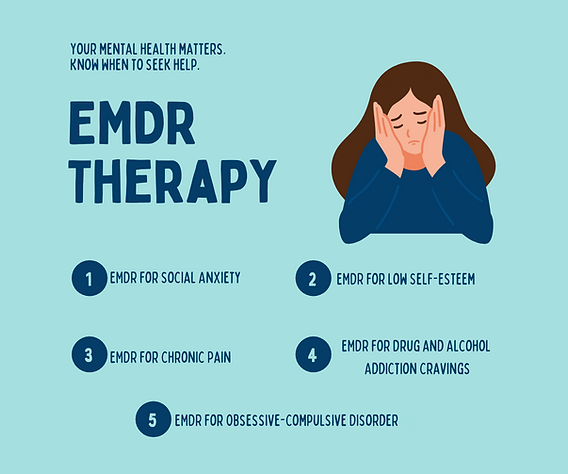
During EMDR treatment, a qualified therapist assists in the patient through structured eye motion sequences while they revisit distressing memories. This process is usually come with by the individual expressing their associated thoughts and emotions. This healing procedure facilitates the mind's capacity to recycle terrible events, lowering their emotional intensity and allowing people to move on.

Latest Posts
Support System at Psilocybin-Assisted Psychotherapy
Your Road to Psychological Well-Being Through Dialectical Behavior Therapy
What Qualifications Do I Need for EMDR Training